When Healthcare Data Cannot Be Trusted, Financial Decisions Become More Expensive
Rising supply costs put hospital leaders under pressure to find savings, justify technology investments, and compare purchasing performance across facilities. But when product identities, units of measure, contract associations, and source systems do not align, even basic questions can become difficult to answer: What was purchased? At what comparable unit cost? Under which agreement? THE HIDDEN ECONOMICS OF HEALTHCARE DATA gives healthcare CFOs, COOs, and chief supply chain officers a practical bridge from fragmented purchasing data to clearer financial visibility. The program helps leaders examine where poor data quality may create financial exposure—without confusing sector-wide cost pressure with losses that have not been measured.
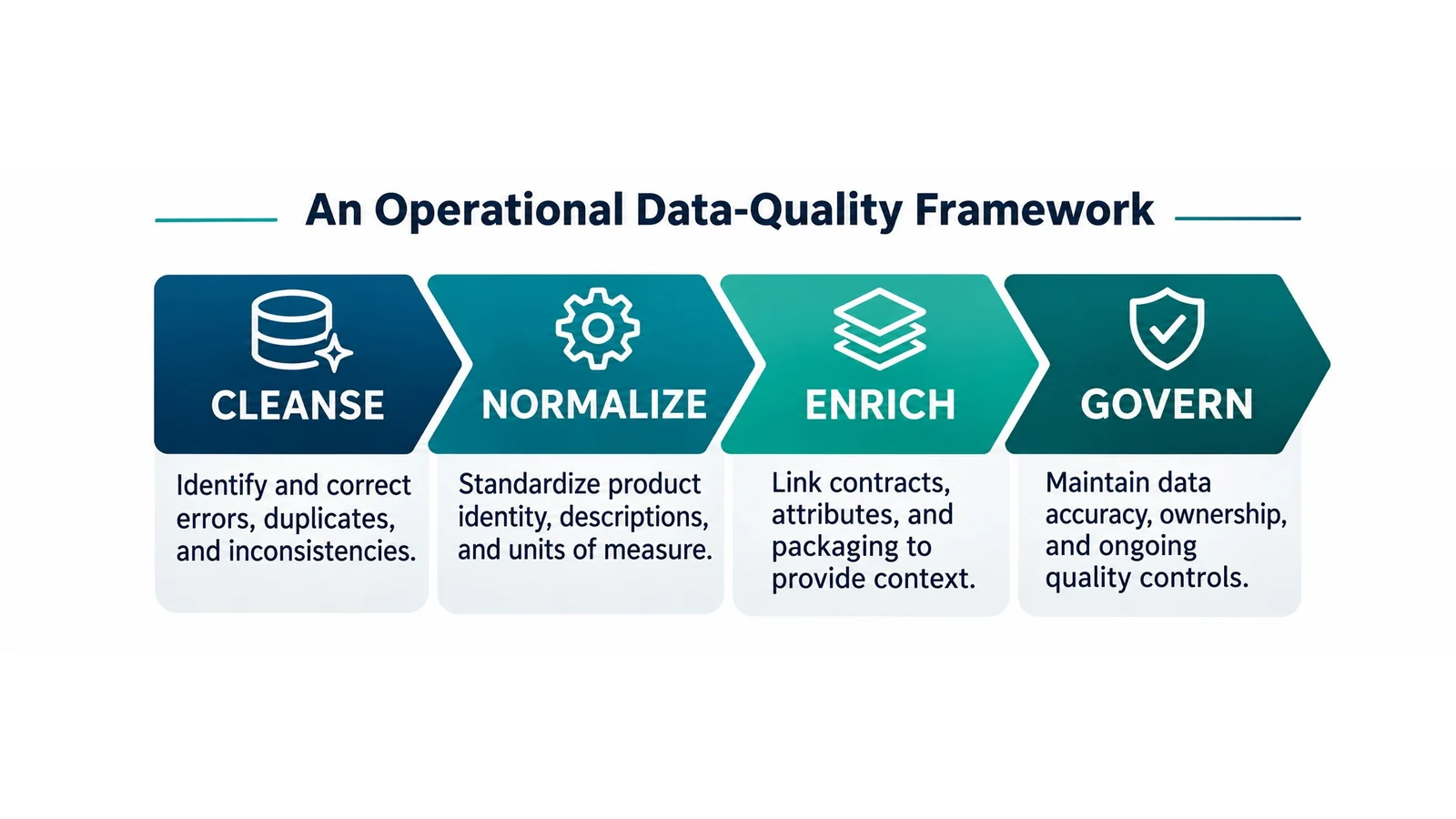
Joseph Prillmayer takes attendees through four potential exposure pathways: unreliable product identification, weak contract linkage, unit-of-measure inconsistency, and poor cross-facility comparability. The session pairs a transparent scenario model with an operational data-quality framework and a 90-day action plan that health systems can adapt to local conditions. Attendees leave with a clearer way to discuss data quality as a financial and operational issue, while organizers gain a timely, substantive program for audiences navigating complex supply networks and rising hospital expenses. It fits executive forums, healthcare finance events, supply chain conferences, and leadership agendas focused on turning data challenges into practical next steps.
What Attendees Can Take Back to Their Health System
- See the exposure: Identify how inconsistent healthcare data can complicate purchasing and financial analysis.
- Trace the pathways: Examine product identity, contract linkage, units of measure, and facility comparability as distinct risk areas.
- Use a transparent model: Apply a practical scenario framework to evaluate potential financial implications without overstating what the data proves.
- Strengthen operations: Connect data-quality issues to purchasing workflows, enterprise systems, and supply chain decision-making.
- Plan the next 90 days: Adapt a structured action plan to local health system conditions and priorities.